Day 29: Our longest in distance and duration
Day 29: Our longest in distance and duration!
Day 29: Our longest in distance and duration!
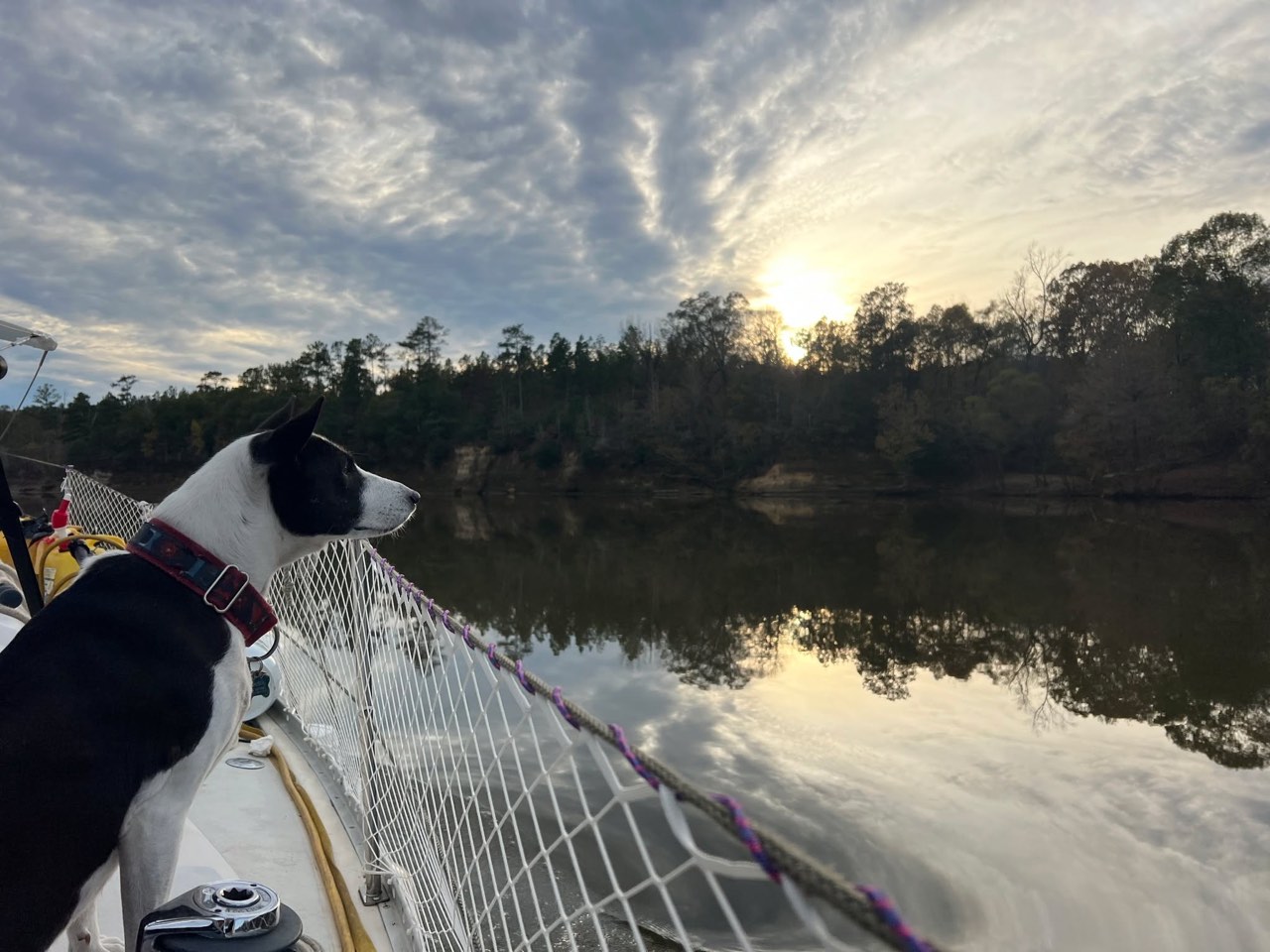
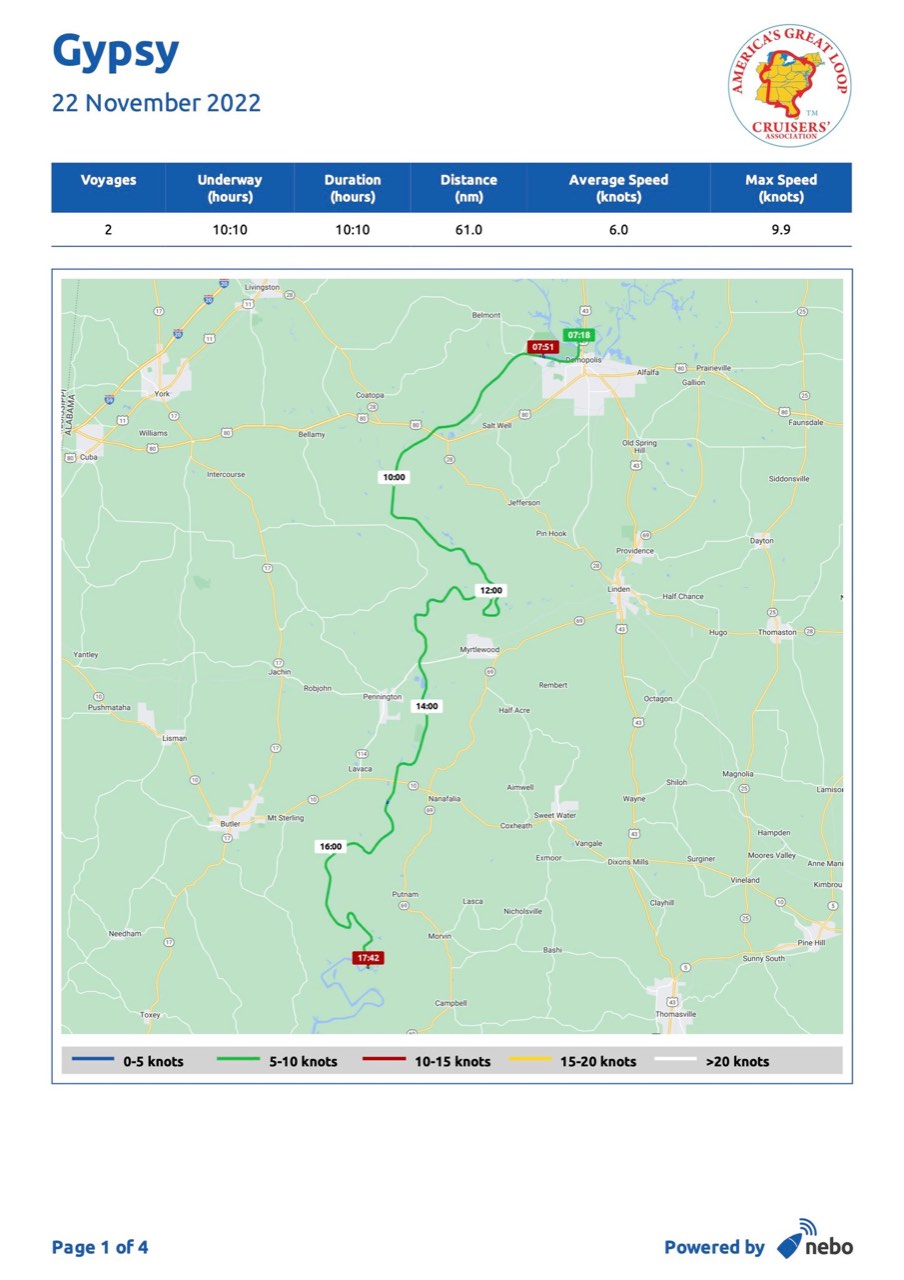
Woof! that was a long one, and with the sun setting earlier and earlier we didn’t get into the anchorage until after dark.
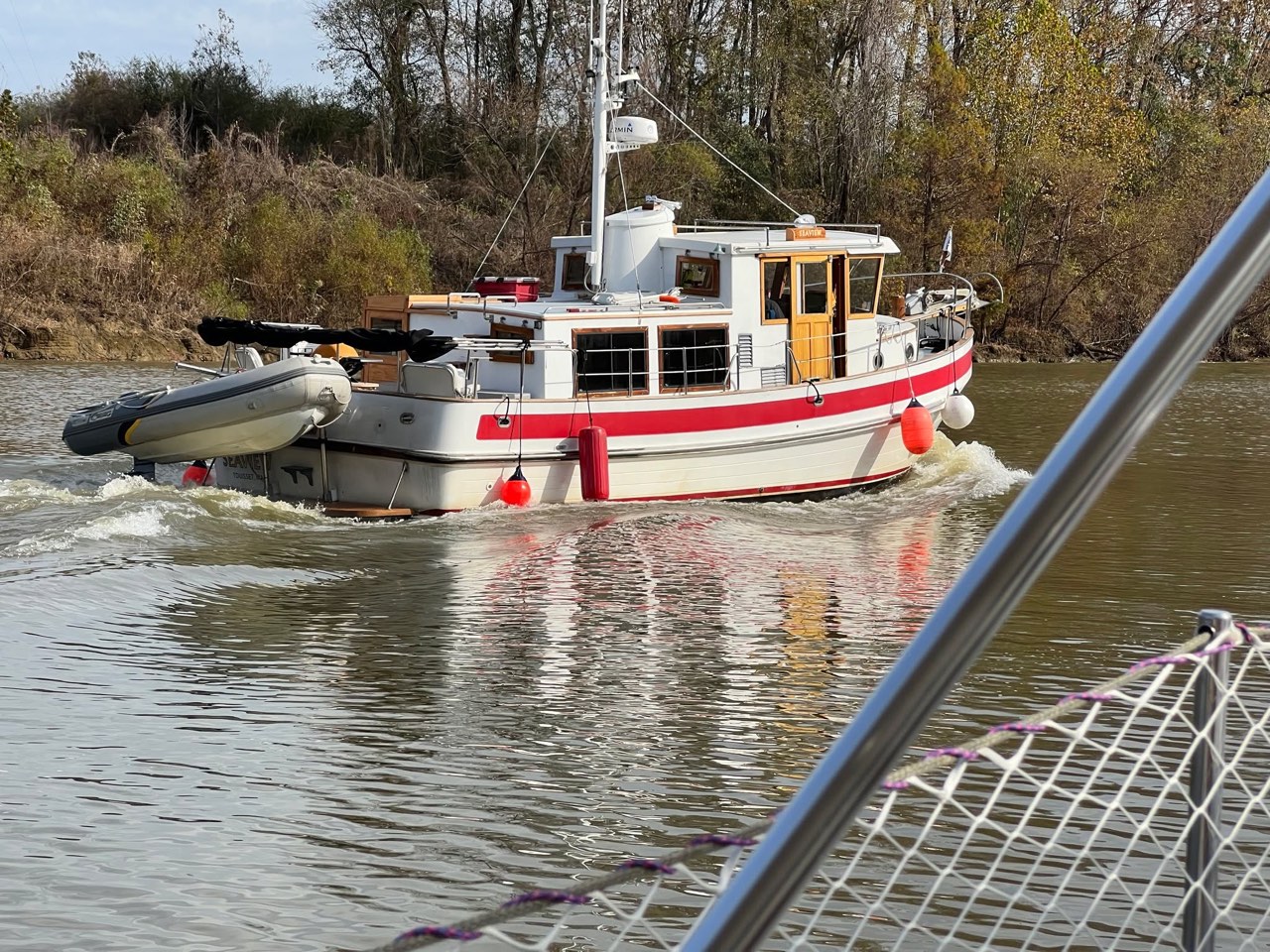
Left the thriving metropolis of Demopolis at 6:30a toady to get a jump on the long day ahead. Again we got lucky with the lock, breezed right through. Only one lock left now, yay!
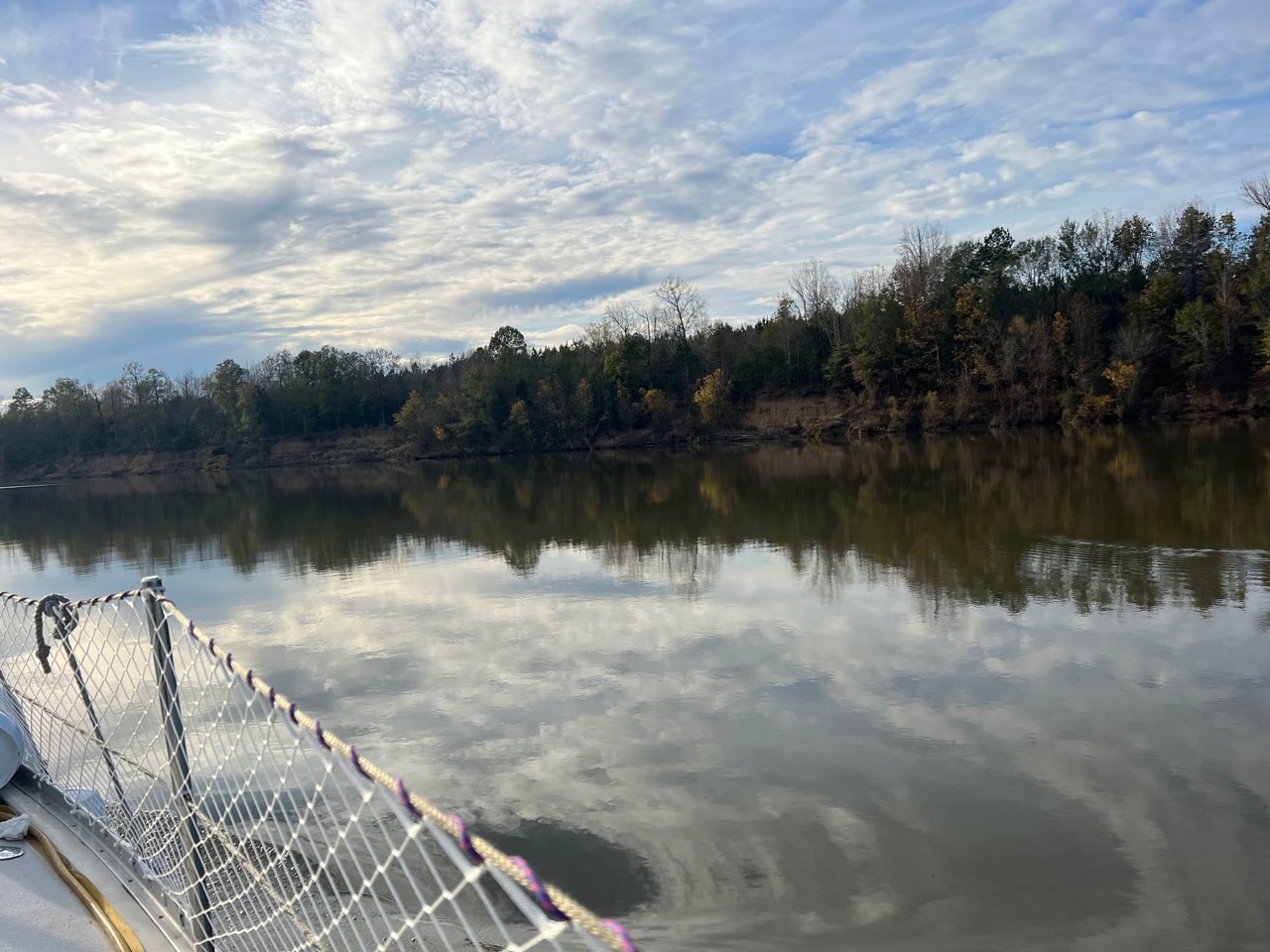
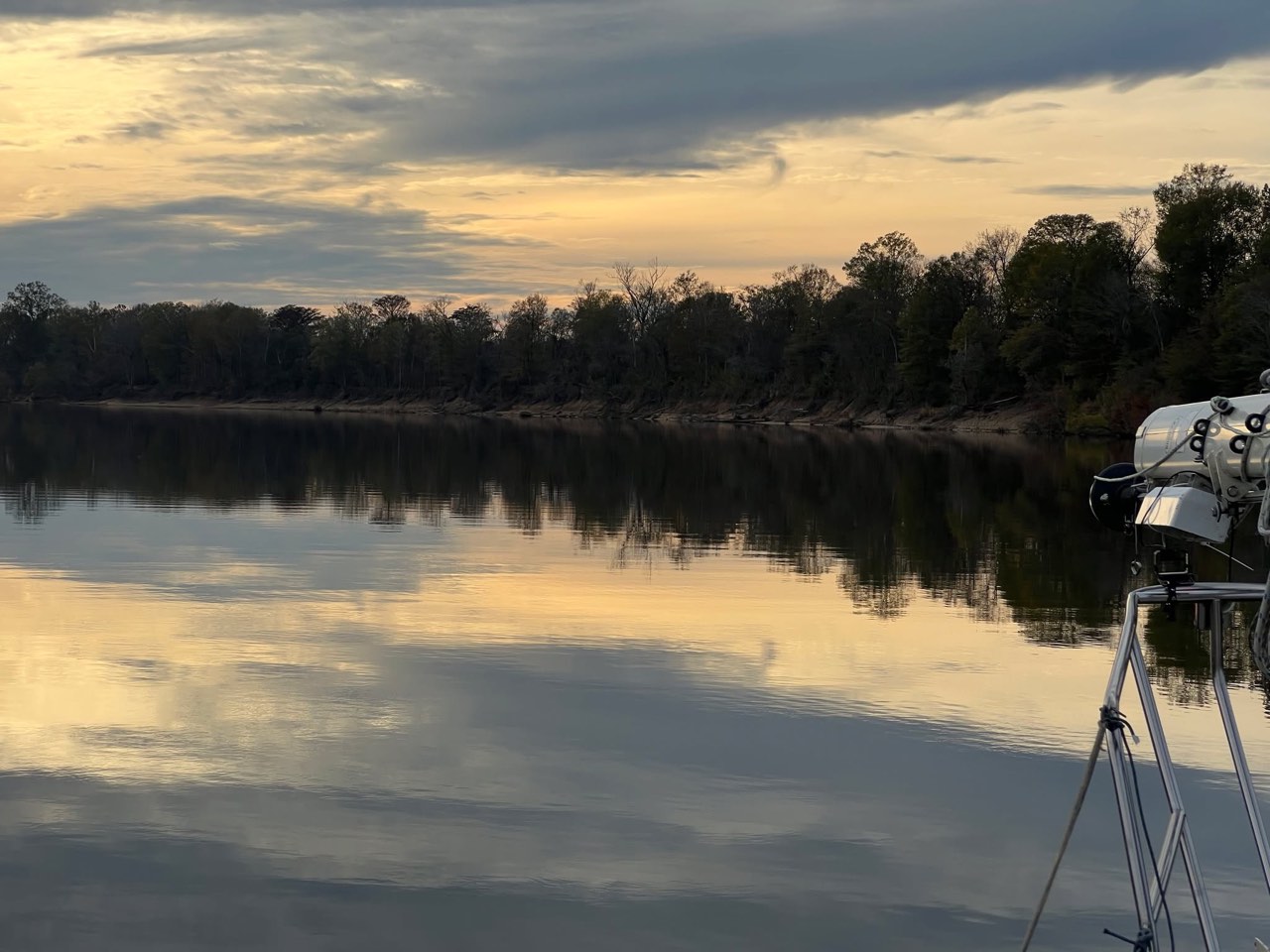
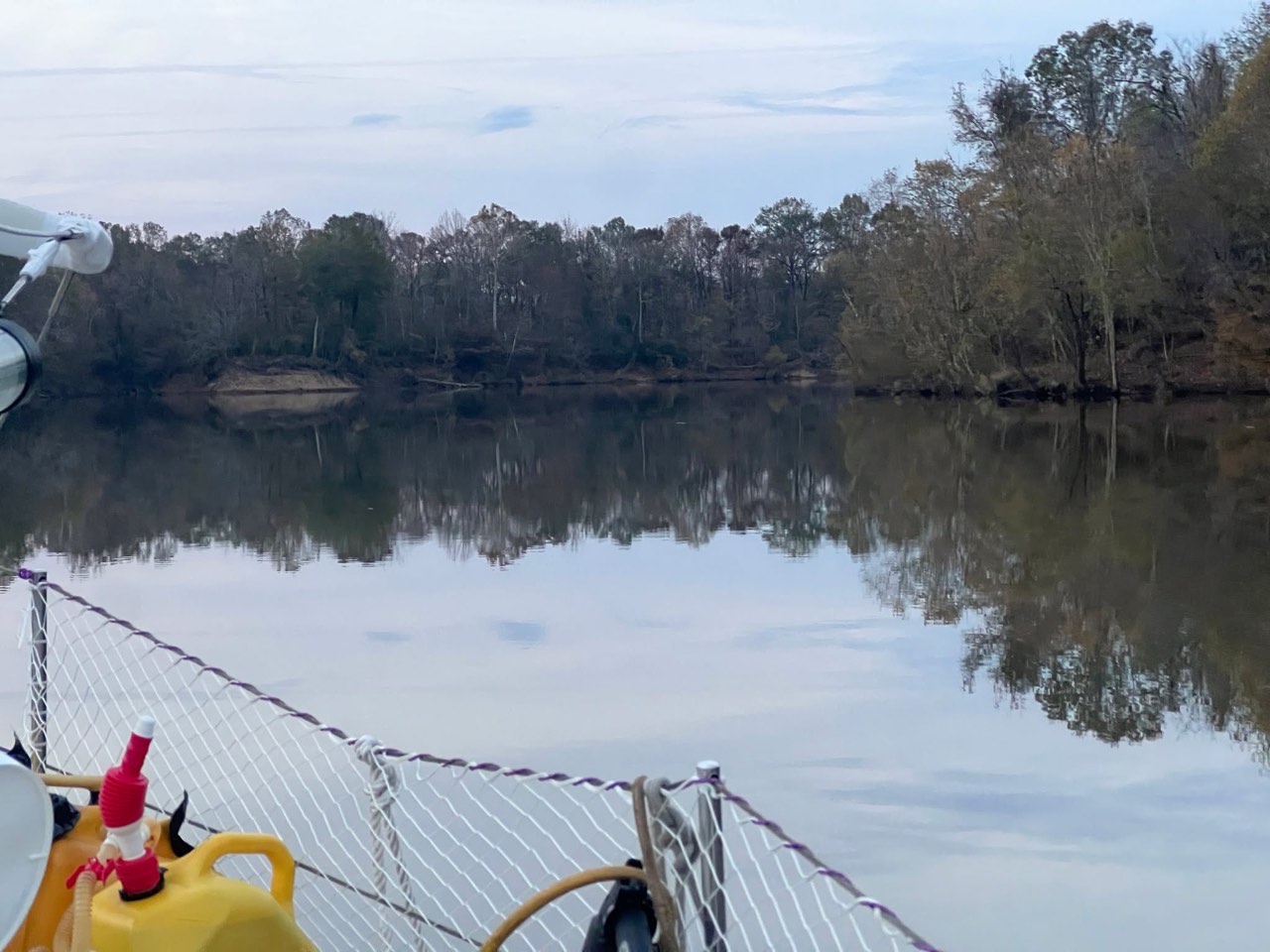
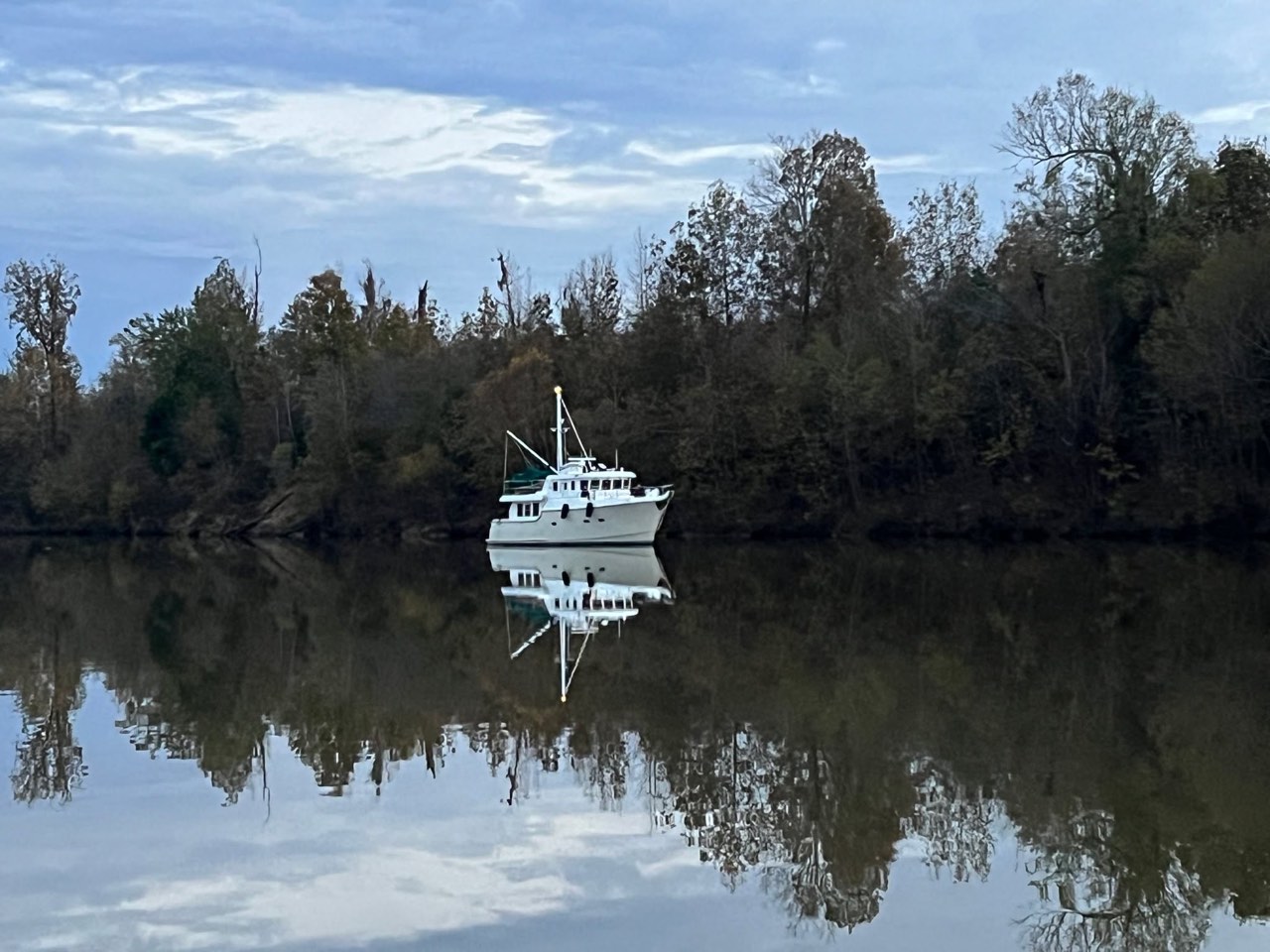
It was the warmest it has been since Green Turtle Bay, hitting the mid 60s here today. Which when you are standing outside almost all day, is great. There was virtually no wind so the water was so still it looked like a mirror, got some good pics.
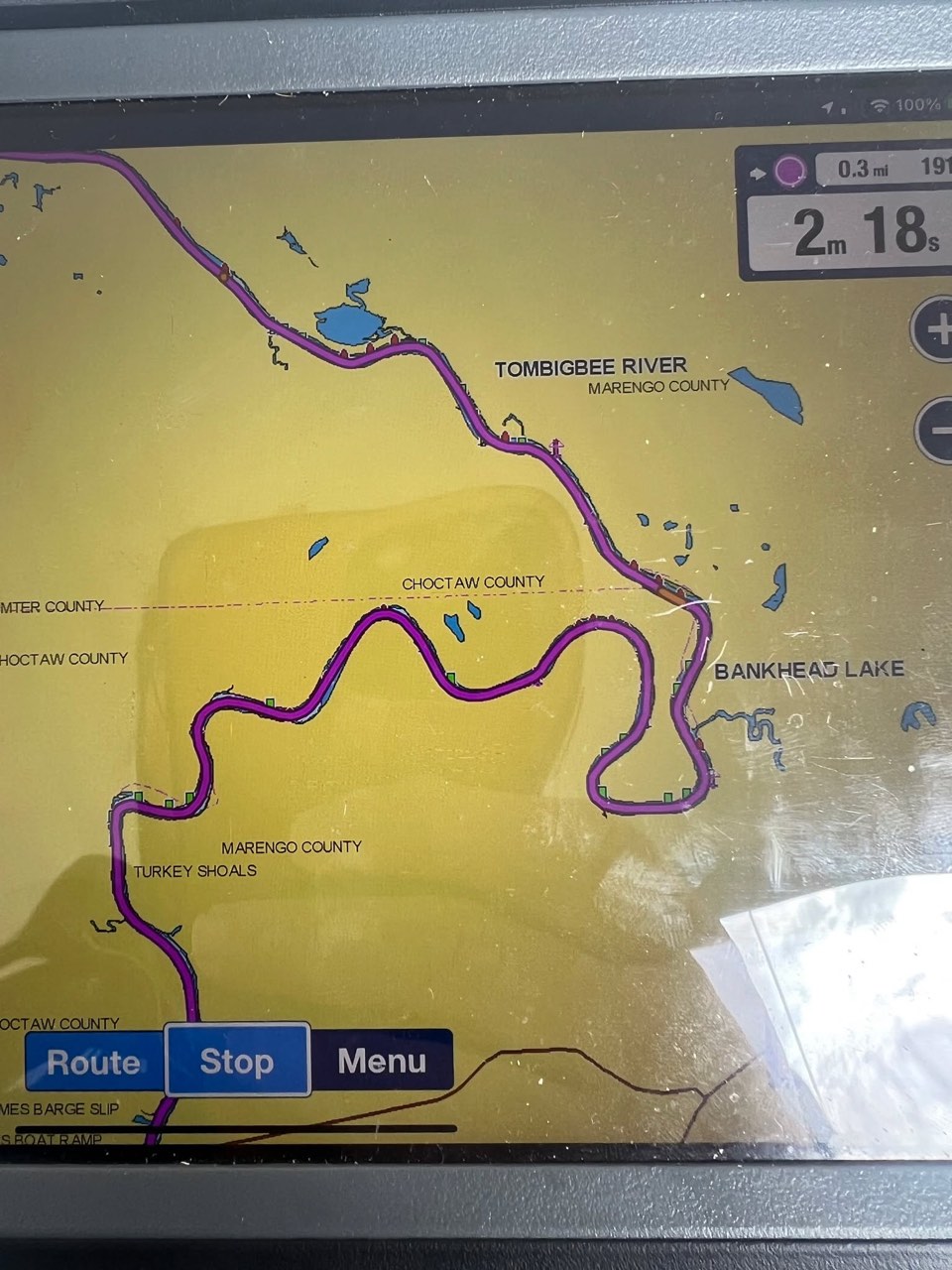
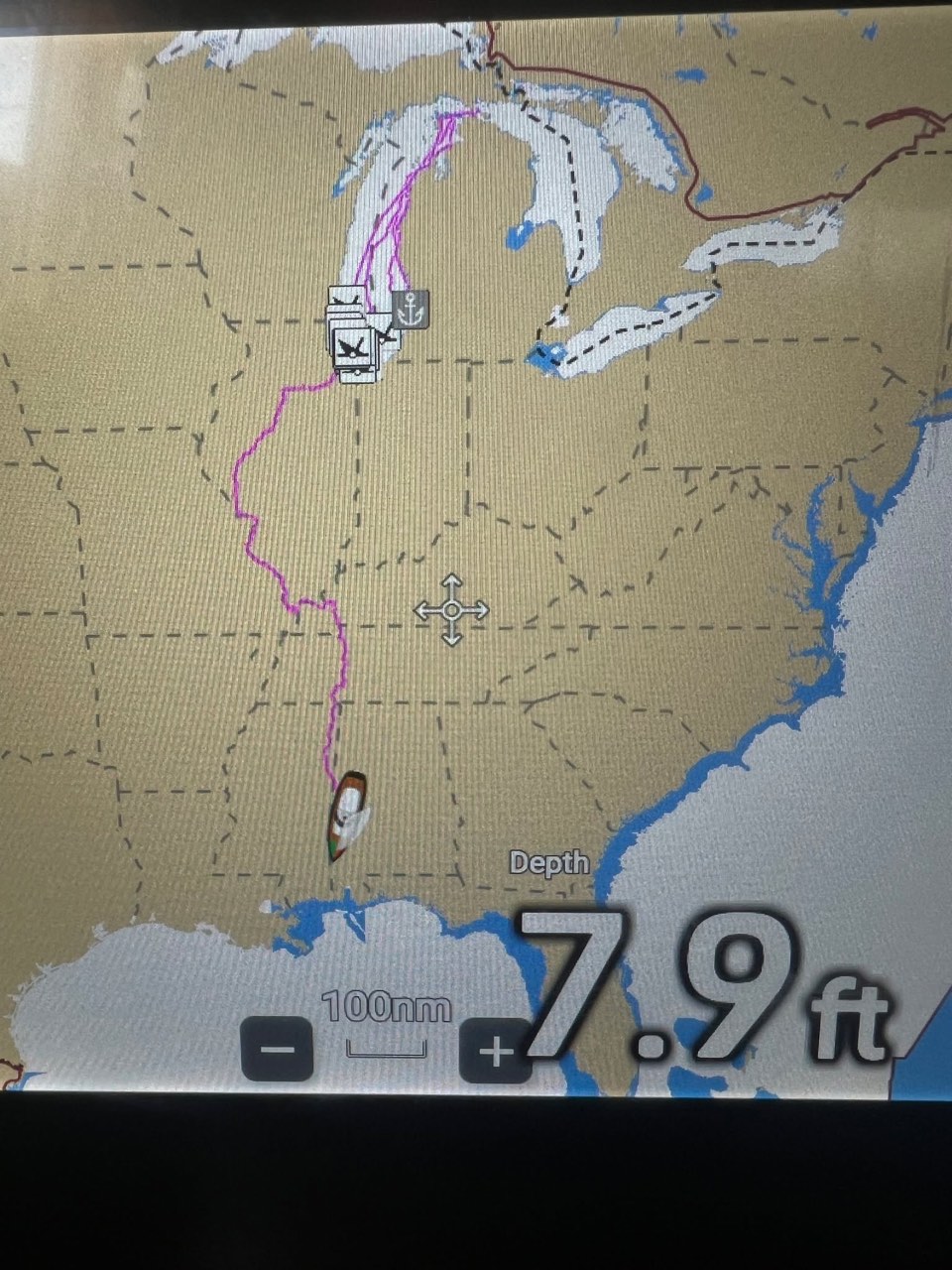
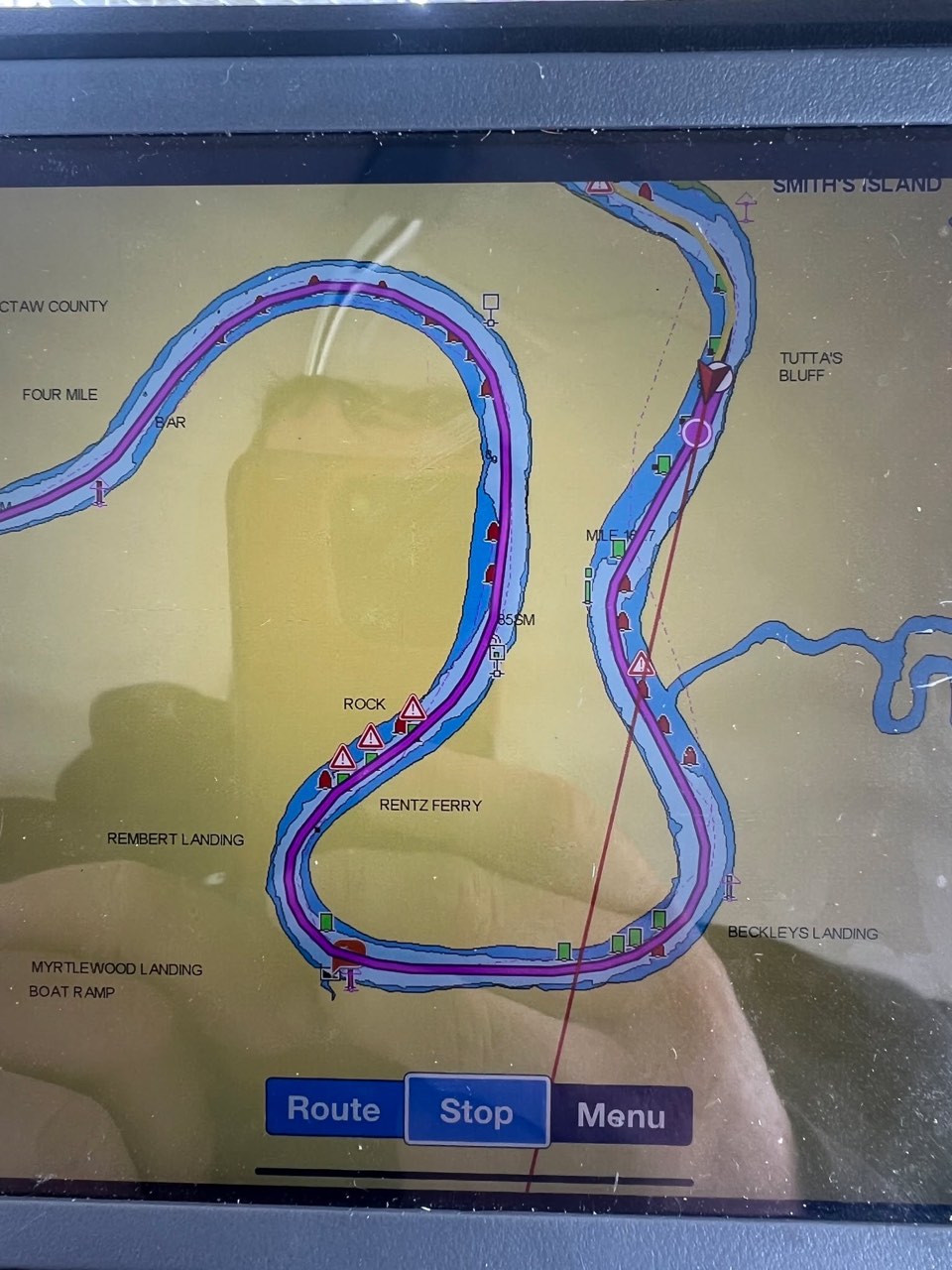
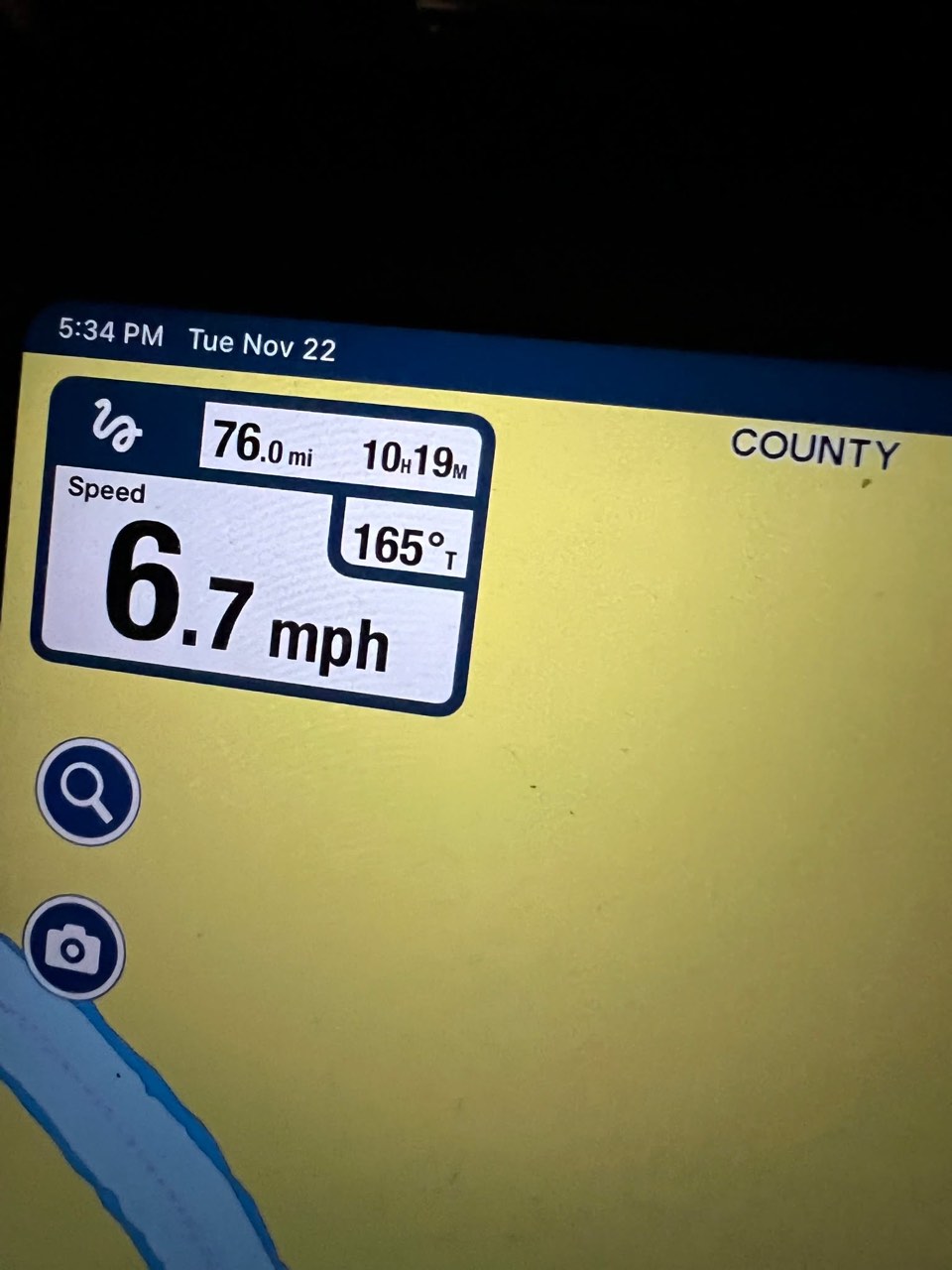
We were underway for over 10 hours, covering 76 statute miles, which amounts to 66 nautical miles. Today was a long day mainly because of all the twisting this river does, lots of wasted miles going the wrong way. We only really went about 40 miles as the crow flies from Demopolis. Since there isn’t much to report beyond how long we were underway, I figured I’ll answer some questions I’ve gotten. Also, if you have questions about the trip, the boat, or life itself and want my unauthorized options, ask away in the comments.
From J. Gutman: “Are you in saltwater yet? Anything you have to do with your engine/boat before/during/after that water change?”
Well Mr. Gutman, that’s a great question! While Gypsy was built in Florida at the Irwin factory in St. Pete Florida, she has been in Lake Michigan all of her life. When preparing her for launch this season I applied a bottom paint that was more aimed at saltwater, opposed to the thin ablative VC-17 most of us sailors use in the great lakes. Boats have “Zincs” or sacrificial metal anodes that erode in water to save the metal they are attached to. () In freshwater we don’t use Zinc, instead we use Magnesium. So Gypsy’s prop shaft and heat exchanger (more on that in a min) have Magnesium anodes, once we get to Mobile (or more likely Florida where the water is warm) I’ll jump in and swap the anode on the shaft. The heat exchanger anode will change too.
As for the engine, I have a Yanmar 3GM(F). It’s a bulletproof fully mechanical engine, that as long as you keep clean oil, fresh fuel, and a good impeller in her they will easily do 5000 hours before a major service. The “(F)” in 3GM(F) stands for “Freshwater”. Which confuses most people. It doesn’t mean it is designed for use in freshwater, it means it is “freshwater” cooled, which even more confusingly, means it uses coolant like you would find in a car, and not what we call “Raw Water” or water from the body of water the boat is in.
In your car you have a radiator, which takes the hot coolant from the engine, runs it though a series of air cooled tubes, then returns the now cooler fluid back to the engine to repeat the cycle. Well on boats we don’t have radiators. Instead we have a water version of a radiator called a “Heat Exchanger”, a device that takes the hot coolant, then runs it though copper tubes in a box that has “raw” or in our current situation river water, over the tubes to cool the hot coolant off before returning it to the engine. That now hot “raw” water, then mixes with the hot exhaust gasses in a mixing elbow before running through the muffler and eventually out the side of the boat. Unlike a car where you have a tailpipe, the exhaust is carried in a rubber hose to a hole in the side of the boat, this water cools the exhaust to nothing catches on fire or melts. Have I bored you yet? No? Great.
So long story short, the engine block itself never actually touches raw (salt or lake) water. Only the heat exchanger does. So what do we need to do to take this freshwater princess into aggressive salt water? Change two sacrificial anodes and we are ready to go.
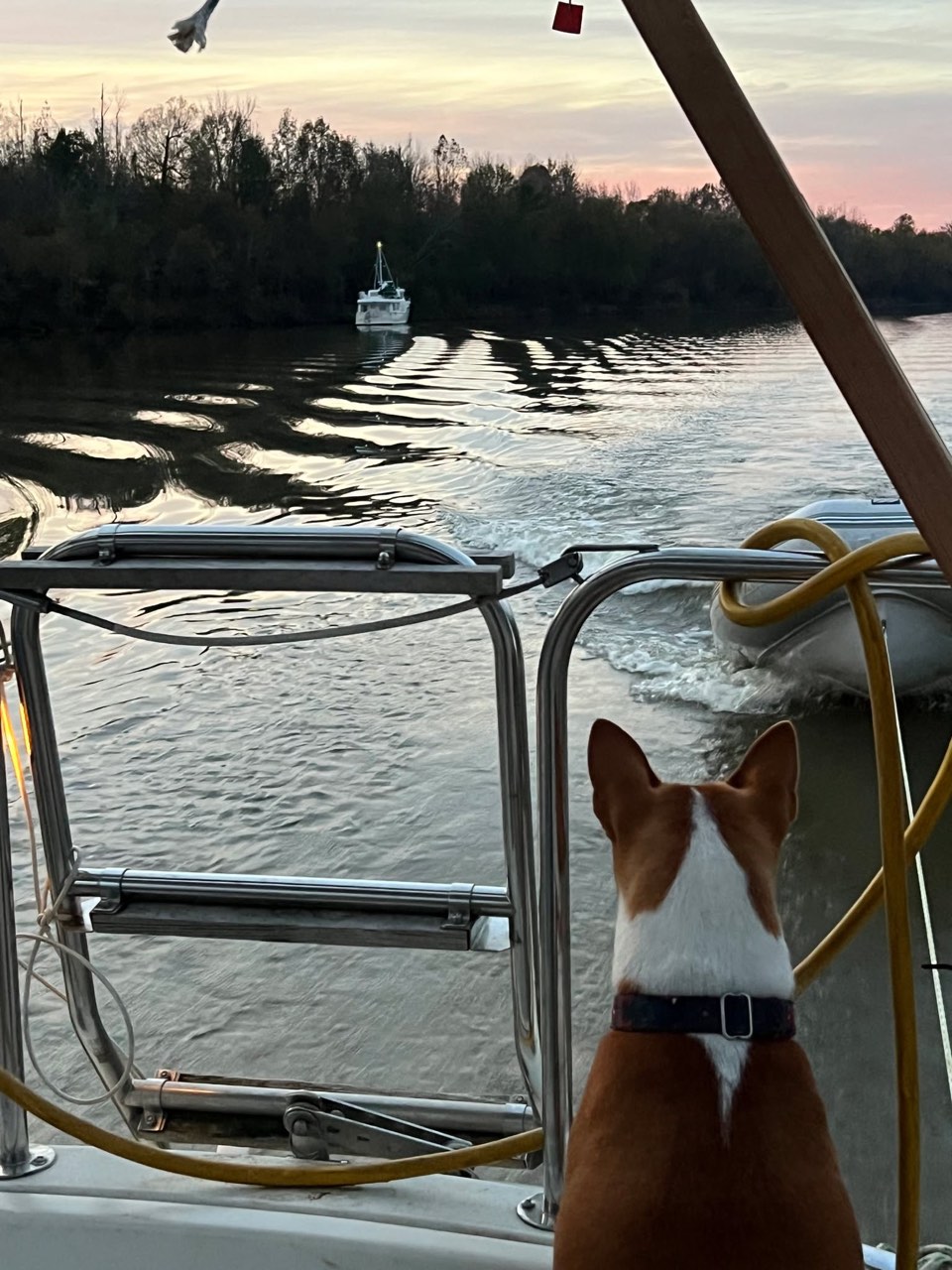
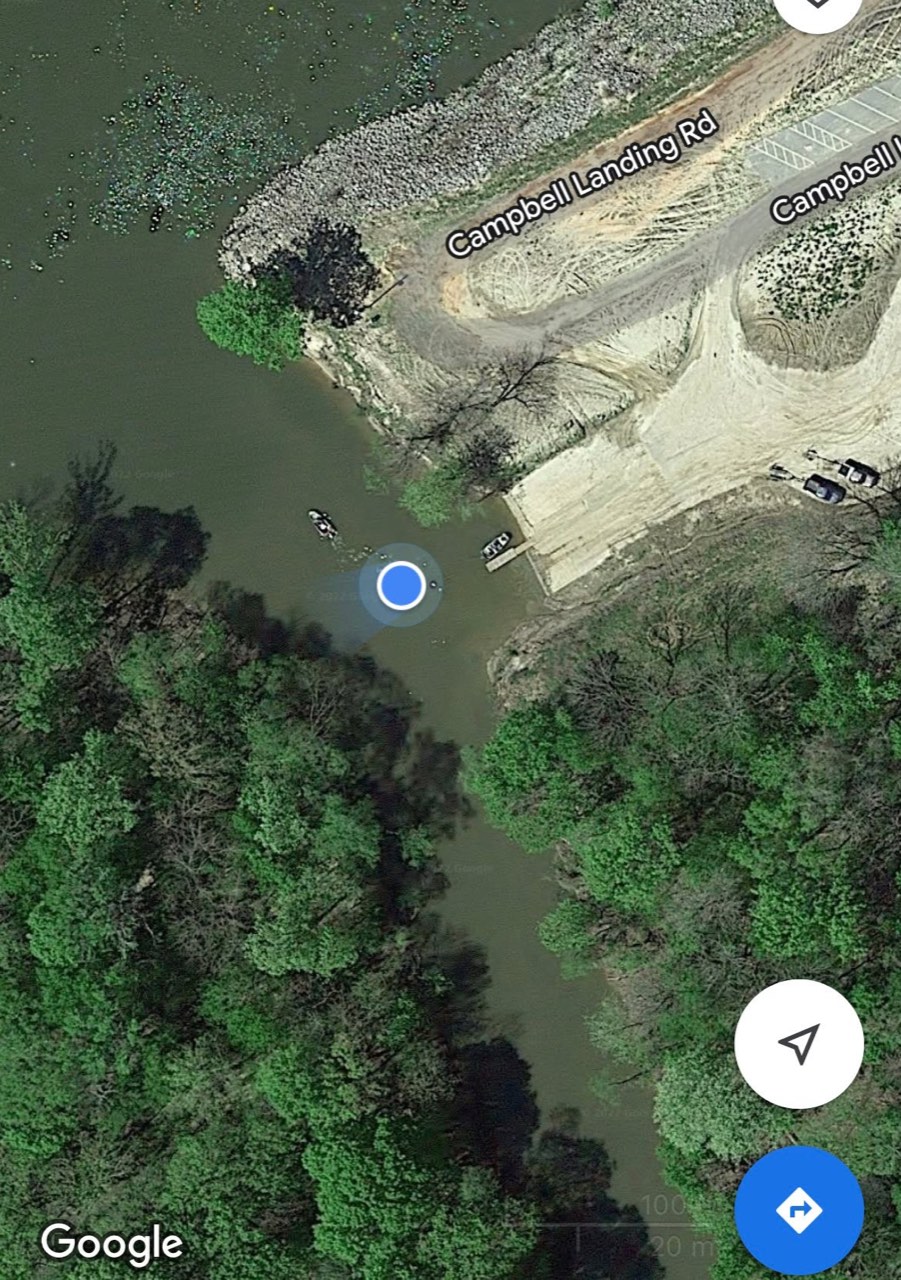
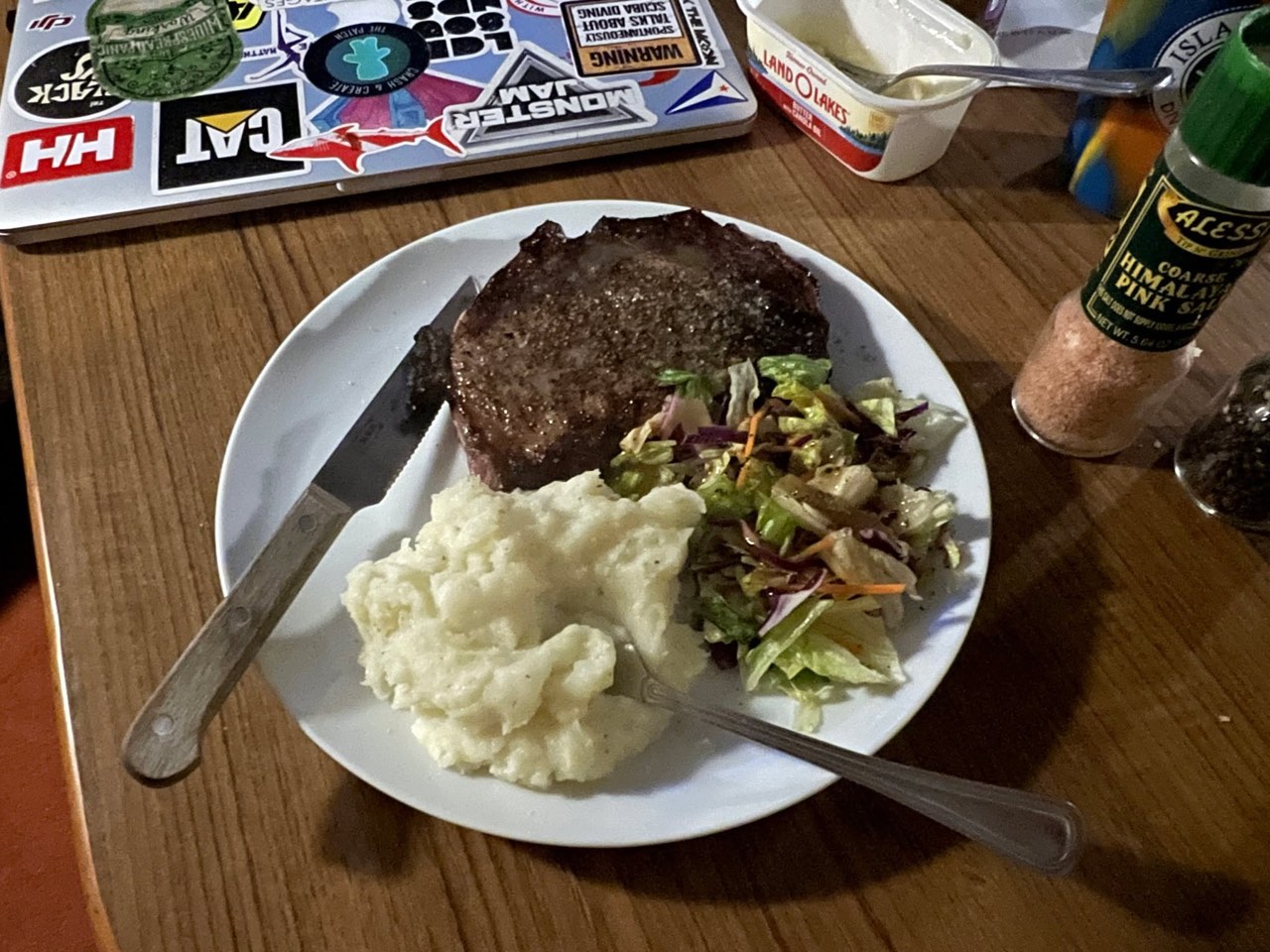
We are tucked into Bashi creek with a few other Loopers. I bought some steaks and mashed potatoes last night so I could reward myself tonight after a long day, and so I’d have a proper thanksgiving dinner Thursday at anchor. Tomorrow we only go 27 miles to Bobby’s Fish Camp which is essentially a campground with a fuel dock, then one night at anchor (Thanksgiving), and then Mobile Yacht Club!
We are tucked in watching 1899 on Netflix, which is spooky as shit (Think Titanic but a horror show), which I don’t recommend watching if you are currently on a boat. Especially if at anchor in a rural area. Ooops.